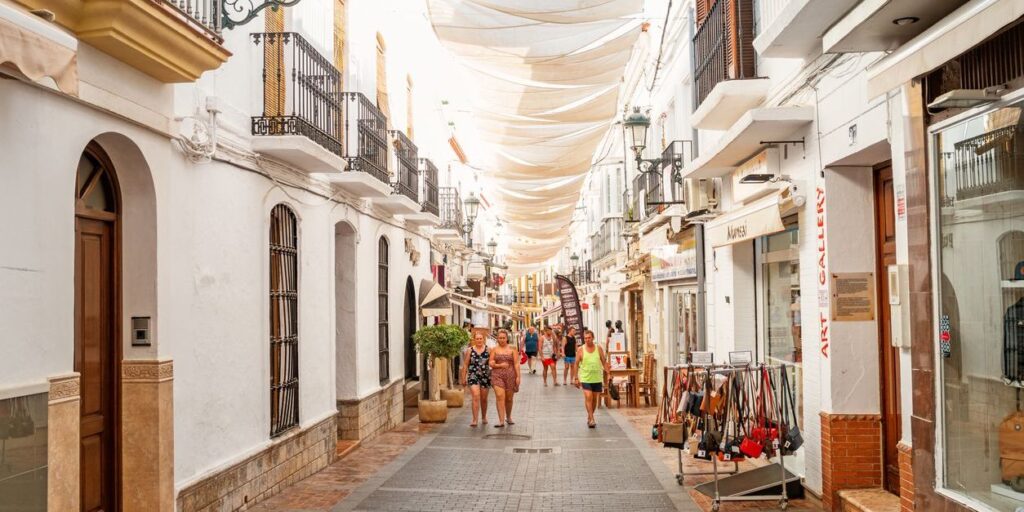
Nerja has done something most Costa del Sol towns haven’t. It stayed itself. The old town is still compact, still whitewashed, still used by people who actually live there rather than just pass through. You step off the main strip and into the streets behind it and something shifts. The pace drops. The noise drops. It stops feeling like a resort and starts feeling like a place.
Here’s what to see, where to eat, and why you’ll want to come back to old town Nerja, Spain.
A Town That Knows Its Own History
Nerja was founded by the Moors in the 8th century. You can still read that in the layout of the old town. The streets are narrow by design, not by accident. They were built to channel shade, to keep the air moving, to make the heat bearable. It worked then and it still works now, which is why the old town stays cooler than the seafront in the middle of August.
After the Reconquista in 1487, the town shifted into Christian hands and the churches and civic squares that came out of that period still anchor the centre today. Then came the 19th century, which brought earthquakes, economic hardship and a slow recovery built largely on sugarcane farming. That’s not the part of the story that ends up on postcards, but it explains a lot about the character of the place.
Tourism arrived in the 1960s and most of the Costa del Sol handed itself over to it fairly quickly. Nerja kept a tighter grip on the old town. Walking through it now still feels like it means something, and that’s not something you can say about everywhere.
The Nerja Landmarks Worth Your Time
The Church of El Salvador is the main architectural draw in old town Nerja. It’s 17th century and the Mudéjar ceiling inside is worth seeing — Islamic geometric craft built into a Catholic church, which is about as good a summary of Andalusian history as you’ll find in one room. It takes ten minutes. Go in.
The Nerja Museum covers local archaeology across several floors and is better than it sounds. The prehistoric sections are particularly well done. On a hot afternoon it also has air conditioning, which you will not take for granted after a morning on the streets.
The Nerja Caves are a few minutes from the old town by car and contain some of the oldest cave art ever found anywhere in the world. That sentence doesn’t quite prepare you for what they actually look like in person. Go and see for yourself.
How to Walk Nerja Old Town Properly
Start early. Before ten, if you can manage it.
The streets nearest the Balcón de Europa fill up by mid-morning in summer. Ten minutes uphill from the main square and it’s a different story. Residential streets, the sound of a television somewhere, and locals mopping the pavement in front of their houses. This is where the old town actually lives.
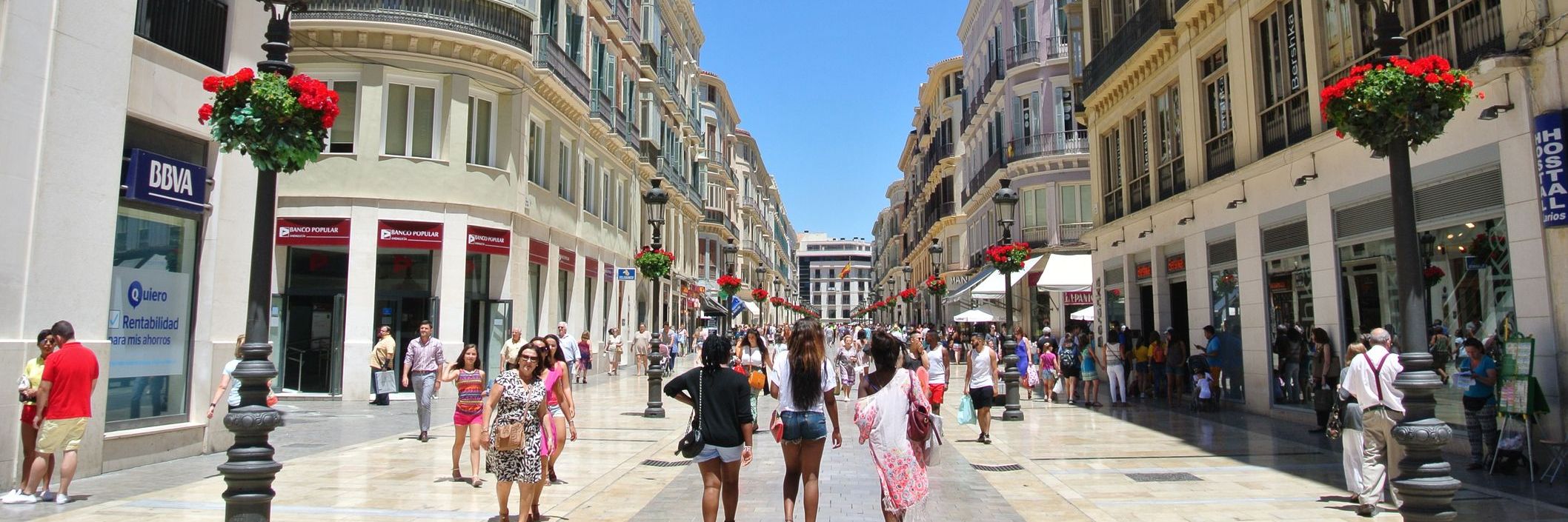
Calle Pintada is the main pedestrianised street through the centre and the obvious starting point. Don’t stay on it, though. The side streets are where you find the small plazas and tiled doorways, walls so thick with bougainvillea you can’t see the plaster underneath. You’re not going to get lost. The old town is small enough that every wrong turn corrects itself within five minutes.
By two in the afternoon in July, the streets are empty and the sensible move is to follow suit.
Where to Eat and What to Buy in Nerja Old Town
The closer you are to the Balcón, the more you’re paying for the view and the less you’re getting for the food. That’s not a criticism, it’s just how these things work. Walk two streets back and the quality goes up as the prices come down.
The bars and restaurants worth finding are the ones with handwritten menus and chairs that have clearly been there since before you were born. Places like Bar El Pulguilla, Dolores El Chispa, Taberna de Pepe, or Bar La Puntilla. Order the pescaíto frito (fried fish). Get a glass of cold fino. Sit in the shade and don’t be in a rush.
As a general rule, avoid anywhere with pictures of the food and anywhere that advertises “tapas”. That’s just click-bait for tourists. It’s the equivalent of advertising “Chinese food” in China.
For shopping, Calle Pintada has local ceramics, olive oil and leather goods that are actually from here. It’s not a long street but it rewards a slow walk.
The Balcón de Europa and the Best Viewpoints
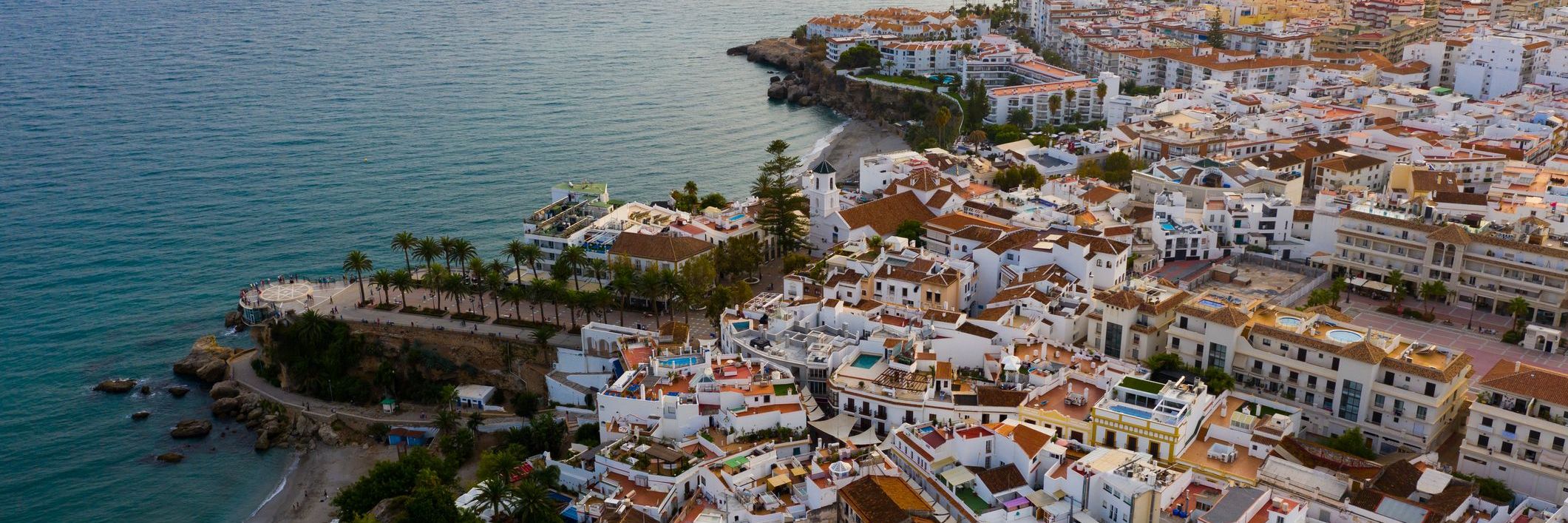
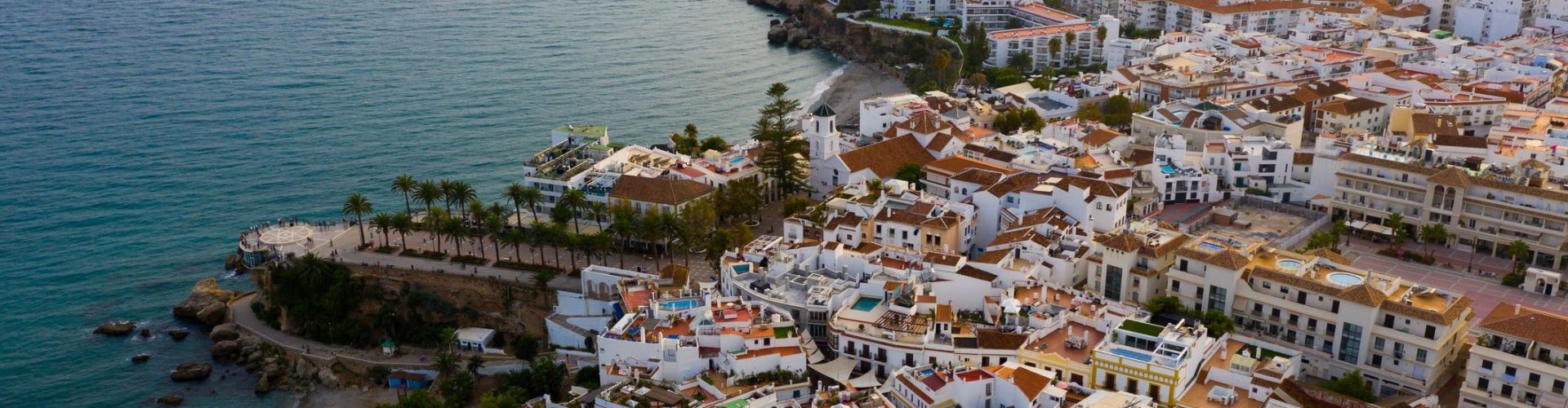
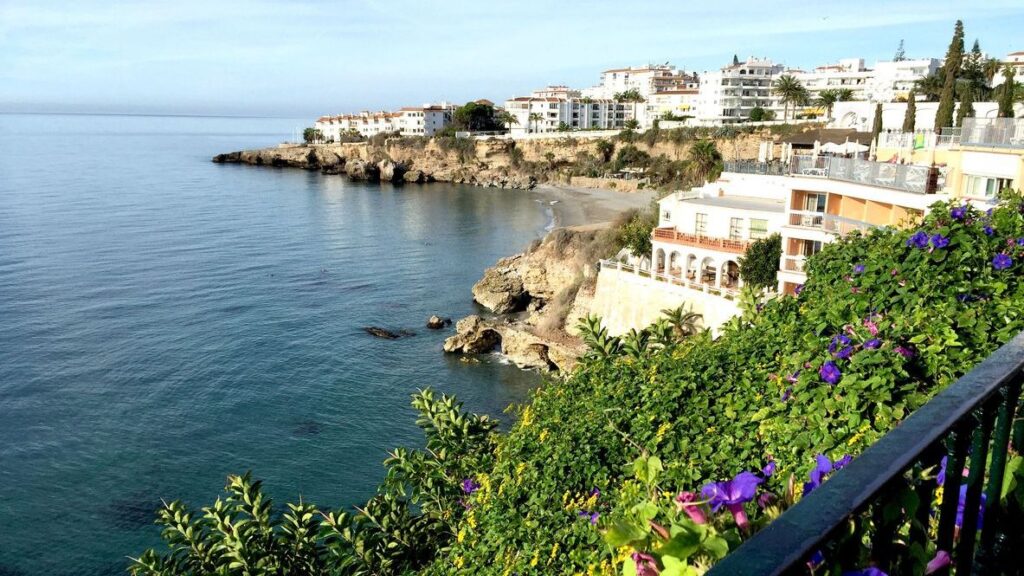
The Balcón de Europa is the one viewpoint you can’t skip. It’s a palm-lined promenade on a natural promontory above the sea, and the views along the coast in both directions are the kind that stop you mid-stride. Go in the morning before the crowds build, or in the early evening when the light turns warm. Both work well.
The clifftop terraces east of the main square look back over the old town rooftops and are worth finding if you want photographs without twenty other people in frame. Quieter, and often better for it.
The beaches below the old town are reachable via steps cut into the cliffs. Playa Calahonda sits directly beneath the Balcón and fills up fast in high season. Burriana, further east, is larger and easier to find space on.
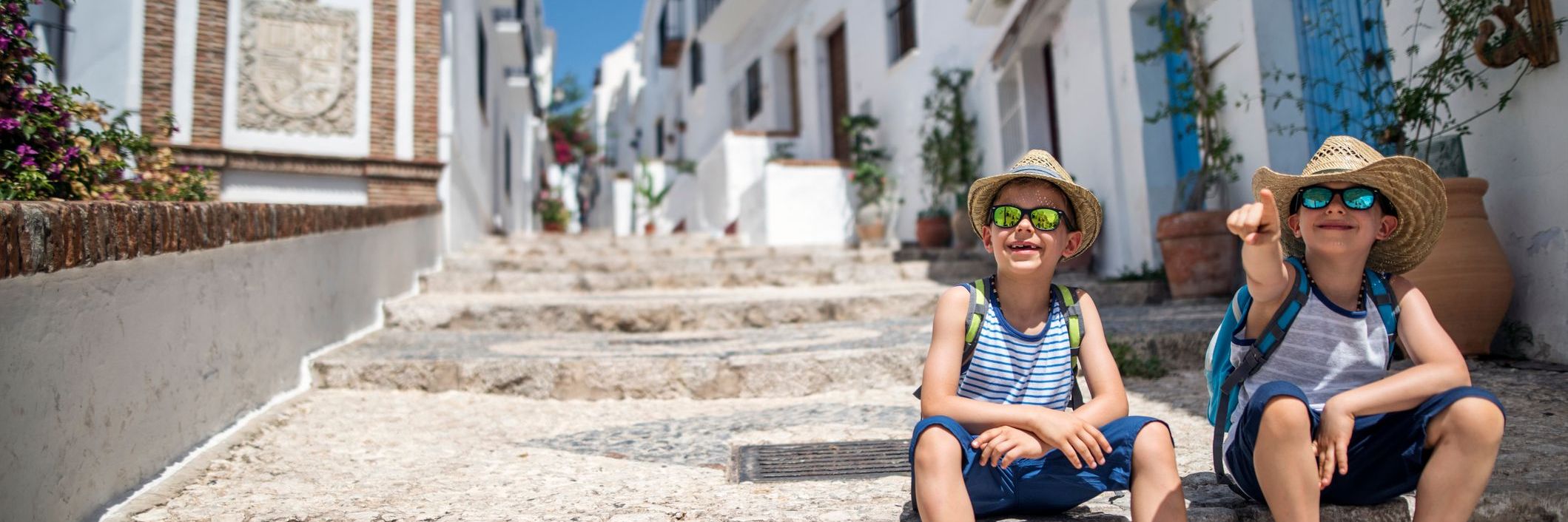
If you want a half-day away from the coast, Frigiliana is 7km inland and worth every minute of the drive. A Moorish hilltop village with narrow white streets and views back down to the sea. It pairs well with a morning in the old town and an afternoon up in the hills.
Start Planning Your Visit to Nerja Old Town
Most places on the Costa del Sol you can visit in a day and feel like you’ve covered them. Nerja old town doesn’t work like that. You’ll leave with streets you didn’t get down or a bar you meant to try. That’s the whole point of it. A week still leaves you something to come back for.
Nerja old town rewards ‘slow’. That means staying close enough to move at your own pace, without a day-trip clock running in the background.
At Home Costa del Sol has a range of properties in and around Nerja, from apartments in the old town to villas with sea views a short walk away.
Browse the full collection here and find somewhere that makes Nerja feel like yours for the week.