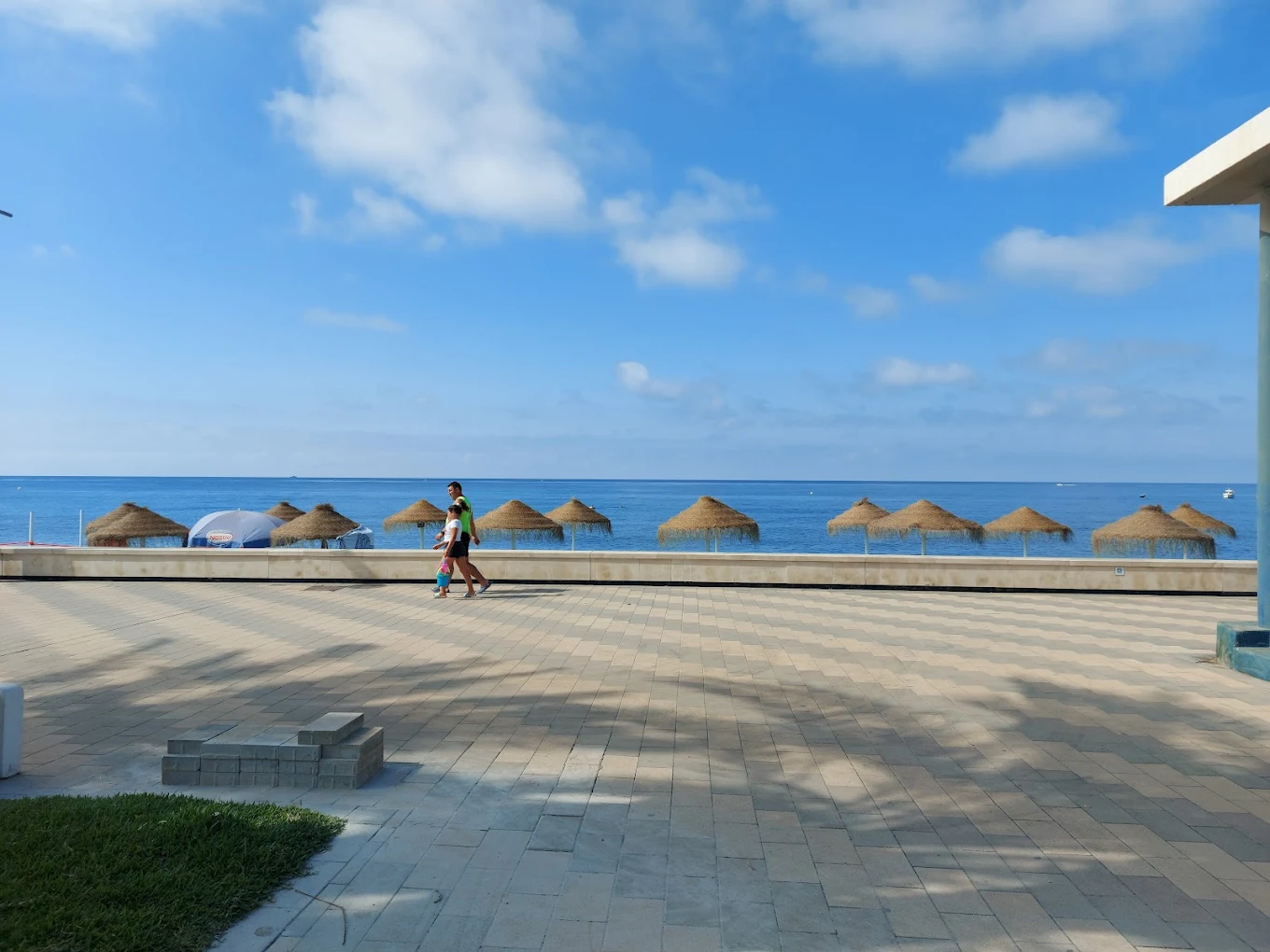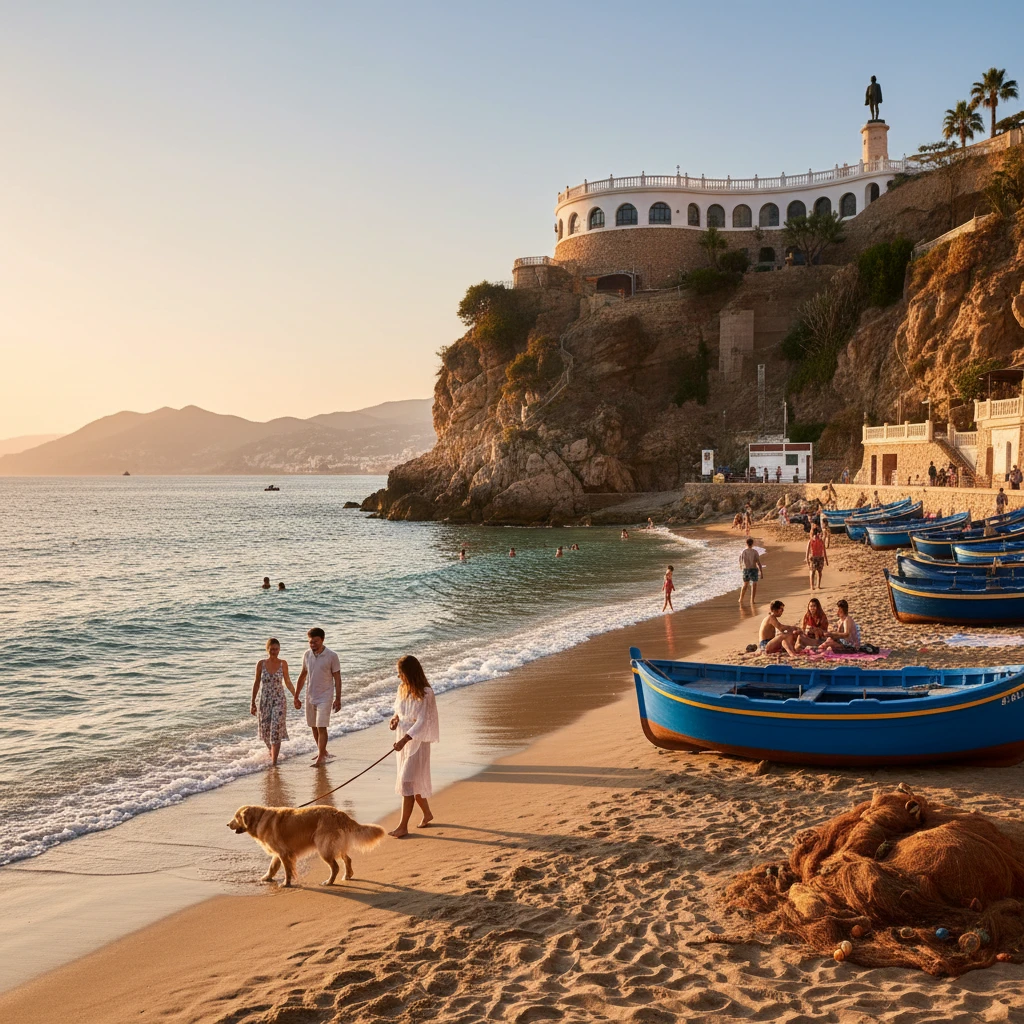

The Torrox Lighthouse sits on one of the most open and wind-polished stretches of the eastern Costa del Sol. It marks the meeting point between the calmer beaches of Torrox Costa and a surprisingly interesting run of archaeological remains. If you want a simple but rewarding coastal stop that mixes views, history, and easy access, this is the place to start.
Introduction to Torrox Lighthouse
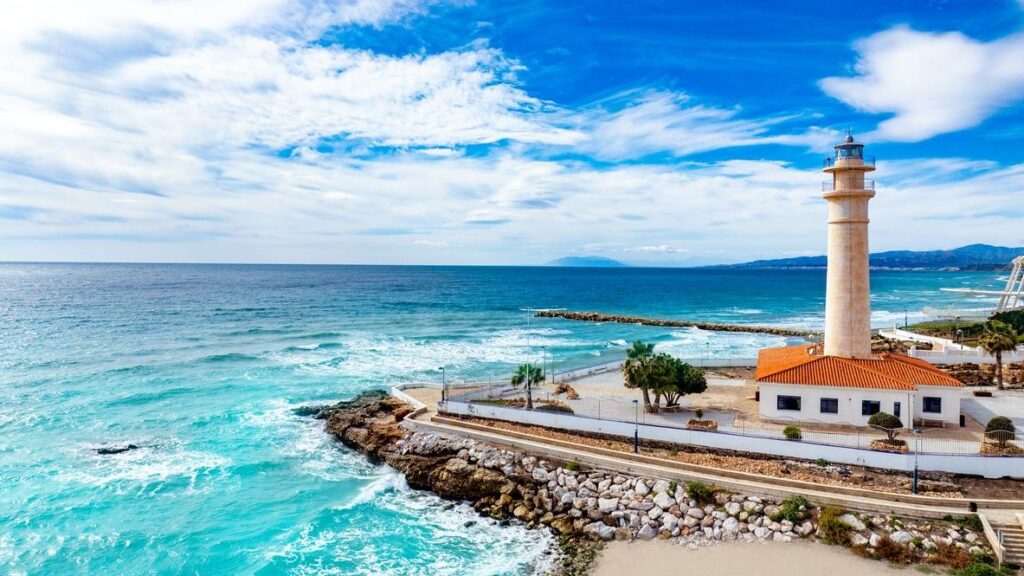
The Torrox Lighthouse (Faro Torrox) might not be the tallest or the oldest on the coast, but it has a knack for catching the eye. It stands on a headland that opens straight out to the Mediterranean, which means you get a proper sense of space before you have even crossed the car park. Visitors tend to wander towards it almost by instinct, and once you get close, the setting does most of the work.
You are right on the edge of the promenade, so it slots easily into a relaxed coastal walk. If you are already exploring Torrox, the Torrox Lighthouse works as an anchor point before drifting towards the beaches or inland streets.
History and Significance of the Torrox Lighthouse
The Torrox Lighthouse was completed in 1864 and still works as a navigational point. It runs on an automatic electric system powered by a photoelectric cell, stands 39 metres above sea level and sends four flashes every 15 seconds with a reach of 20 nautical miles.
It sits directly above the Villa Romana, part of the Roman settlement of Caviclum mentioned in the Antoninus Route. Excavations show a site focused on agriculture and fish processing, with rooms arranged around an atrium with an impluvium. The mosaics found here are well preserved and give the area real archaeological weight without demanding a long visit.
If you found the Roman elements at the Nerja Museum interesting, this feels like a shorter companion visit.
Viewing Points and Balcony Area
Walk towards the Mediterranean side and you reach the Torrox Lighthouse Balcony and Viewpoint (Balcón Mirador del Faro), a modern structure built in the early twenty-first century from iron and glass. It looks a bit like the bow of a ship and deliberately frames the horizon. The glass floor reveals glimpses of the Roman remains below, which is a clever way of linking both eras without forcing it.
The platform offers one of the clearest coastal views in this part of Axarquía. On a bright day you can trace the coastline towards Nerja and pick out the mountains that rise behind the town.
If you’re building a trip around the area, this is also a handy midpoint for exploring both Torrox and the eastern stretch towards Nerja. For ideas beyond the coast, the guide to what to see in the province of Málaga is useful for planning days out.
Nearby Walks and Beaches
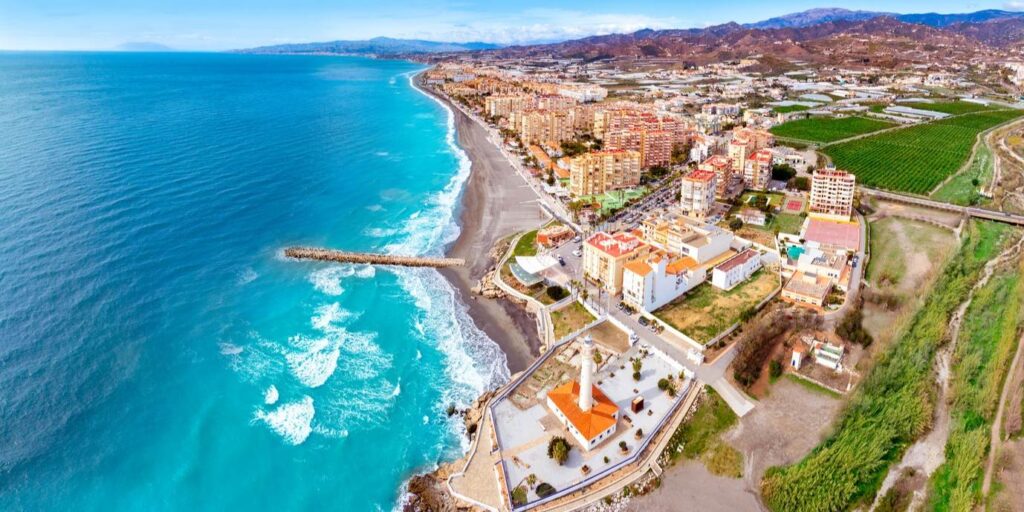
If you follow the promenade west, you reach the central Torrox Costa beach area. This part of the coast works well for families, casual strollers, and anyone who prefers soft sand over rugged coves. For further detail, our blog on Torrox beaches breaks down each stretch with the practical points you actually need.
Turn east instead and the path runs towards quieter corners. It becomes a flatter and more open route, perfect for anyone who likes a steady walk without getting stuck behind crowds. If you enjoy combining walking with water sports, the coastal setting ties in nicely with the activities listed in our guide to water activities on the Costa del Sol.
You can also head a couple of kilometres inland towards Torrox Pueblo if you prefer old-town streets. It sits slightly higher and offers a different atmosphere from the coast.
Best Times to Visit Torrox Lighthouse
The Torrox Lighthouse area works year-round, but the experience changes with the season. Winter light is crisp, and the lack of heat makes longer walks more comfortable. Spring brings clearer skies and a bit more colour. Summer afternoons can be strong, so early mornings or evenings tend to be the best bet. Autumn is pleasant and often quieter than many visitors expect.
If you like the idea of pairing your visit with a local celebration, the Torrox Fair often runs in early October.
Torrox Lighthouse Visitor Information
Access is straightforward with parking close to the promenade. The terrain around the lighthouse is flat, making it suitable for most visitors. Facilities run along the seafront, so cafés and restaurants are close by.
One detail surprises many people. The Torrox Lighthouse is the only lighthouse in the area open for public use. It falls under the control of the Torrox City Council and houses the Torrox Marine Museum. The museum space is compact but interesting, especially if you like coastal history and navigation. Entry to the archaeological zone remains free, and it’s easy to walk the site without needing a long stop.
A Good Reason to Visit and Where to Stay Nearby
The Torrox Lighthouse gives you a simple but rewarding reason to stop and take in the coastline. It’s one of those places that fits easily into a morning or an afternoon, without forcing you to choose between history, views, or beach time. You get a bit of each, which makes it ideal for visitors who prefer straightforward sightseeing over tightly scheduled days.
When you’re ready to stay in the area, At Home offers apartments, villas, and sea-facing holiday lettings across the Costa del Sol. Each option gives you the comfort you need after a full day on your feet. If you want a base close to the lighthouse and the beaches, browse the available stays on the At Home website and start shaping your visit properly.